








A gray outdoor heat pump unit on a concrete pad beside a dark horizontal-siding wall, with a small electrical box on the wall, shrubs and a concrete walkway to the right at dusk.

Get your heat pump to the right pro

How cold is too cold for a heat pump in Delaware

Most heat pumps lose efficiency as the temperature drops, and below a certain point they can't keep up on their own. Where that point falls depends on your unit and your house. This page walks through what happens in a Delaware winter and what it means for your setup. If you want a straight read on whether yours needs backup heat or an upgrade, you can get matched with a contractor who'll look at your situation.

Get a heat pump pro

Most heat pumps start struggling somewhere between 25 and 35 degrees, and by the time it drops into the teens, they're losing the fight against the cold. That's because a heat pump works by pulling heat out of the outdoor air and moving it inside. The colder the air gets, the less heat there is to pull, and the harder the unit has to work to get the same result. Delaware winters dip into that range often enough that most heat pumps here lean on a backup heat source for the coldest stretches, usually a few times each winter. A heat pump that isn't sized or installed for this climate will run constantly without getting your house warm, and you'll notice it in the thermostat not budging, or in the backup heat kicking in far more than it should. That points to a system that isn't matched to what Delaware winters actually demand.

A beige outdoor air conditioning condenser unit on a concrete pad beside a house with horizontal vinyl siding, with refrigerant lines and a disconnect box on the wall, surrounded by dark mulch and a green shrub at left.
Above 25 degrees or so, the unit outside is just doing its job quietly, running steady without any backup heat kicking in.
An outdoor air conditioner condenser unit on a concrete pad beside a house with horizontal lap siding, with a shrub to the left, bare dirt in front, and conduit and a metal disconnect box on the wall.
Once it's stuck running nonstop and the house still feels cool, it's lost ground to the cold and needs backup heat or a look from someone who installs these.
An older man with gray hair and a beard, wearing a dark coat dusted with snow, stands smiling in a doorway of a warmly lit home with a sofa, lamp and window visible behind him.
An older man with grey hair and a beard, wearing a dark coat dusted with snow, stands in a dimly lit entryway with a ceiling lamp, a side table with two shaded lamps, and a lit fireplace visible in a room beyond.
A bearded older man in a dark snow-dusted coat and scarf stands just inside a home's front door, with a lamp-lit room and snowy window visible behind him.
An older man with gray hair and a beard stands in a doorway of a home, wearing a dark coat dusted with snow, with a lit fireplace and lamp visible in the blurred room behind him.

Why does the house feel cool even with the heat pump running

On a cold Delaware morning, you might notice the vents blowing air that feels barely warm, or the unit outside running non-stop without the house ever quite catching up to the thermostat setting. Upstairs rooms lag behind the rest of the house. The outdoor unit may ice over, or you'll hear it click into a defrost cycle more often than usual. If backup heat kicks in, you'll notice the electric bill climb, since Delaware's winters push it on more than people expect and the backup draws more power than the heat pump alone. Left alone on a hard freeze, a heat pump that can't keep up just means a colder house and a higher bill, not damage to the system itself.

An outdoor air conditioning condenser unit on a concrete pad beside a house with horizontal siding above a brick foundation, with a flexible conduit running to a wall-mounted disconnect box.
Before you get your heat pump installation
An outdoor condenser unit on a concrete pad beside a gray lap-sided house, with an electrical disconnect box and conduit on the wall and shrubs with mulch to the right.
After you get your heat pump installation

What backup heat is doing

When a heat pump can't pull enough warmth from the outdoor air, the system switches to backup heat, usually electric strips built into the air handler, to make up the difference. That backup heat is what keeps the house warm on the coldest mornings, but it runs on electricity, and electric strip heat uses a lot more power than the heat pump's compressor does on its own. Since power costs more here than in a lot of other states, a unit that leans on backup heat for weeks at a time shows up clearly on the bill. A unit sized and installed for Delaware's winters leans on it less.

Why most homes here use gas

Most houses in Delaware heat with gas, and a gas furnace doesn't lose output as the temperature drops the way a heat pump does. Some homes split the job: a heat pump for the mild months and a gas furnace that takes over once it gets cold enough that the heat pump stops pulling its weight. That setup, sometimes called a dual fuel system, hands the heating job to whichever source makes more sense for the temperature outside. It's one reason the cutoff point for a heat pump matters less in a house that already has gas backing it up.

Power costs 17.15 cents per kilowatt-hour statewide

That backup heat isn't cheap to run. At 17.15 cents per kilowatt-hour, the electric strips covering for your heat pump on the coldest days will push your bill up fast, especially with gas as common as it is here for Delaware heating.

EIA-861 2025 statewide residential average

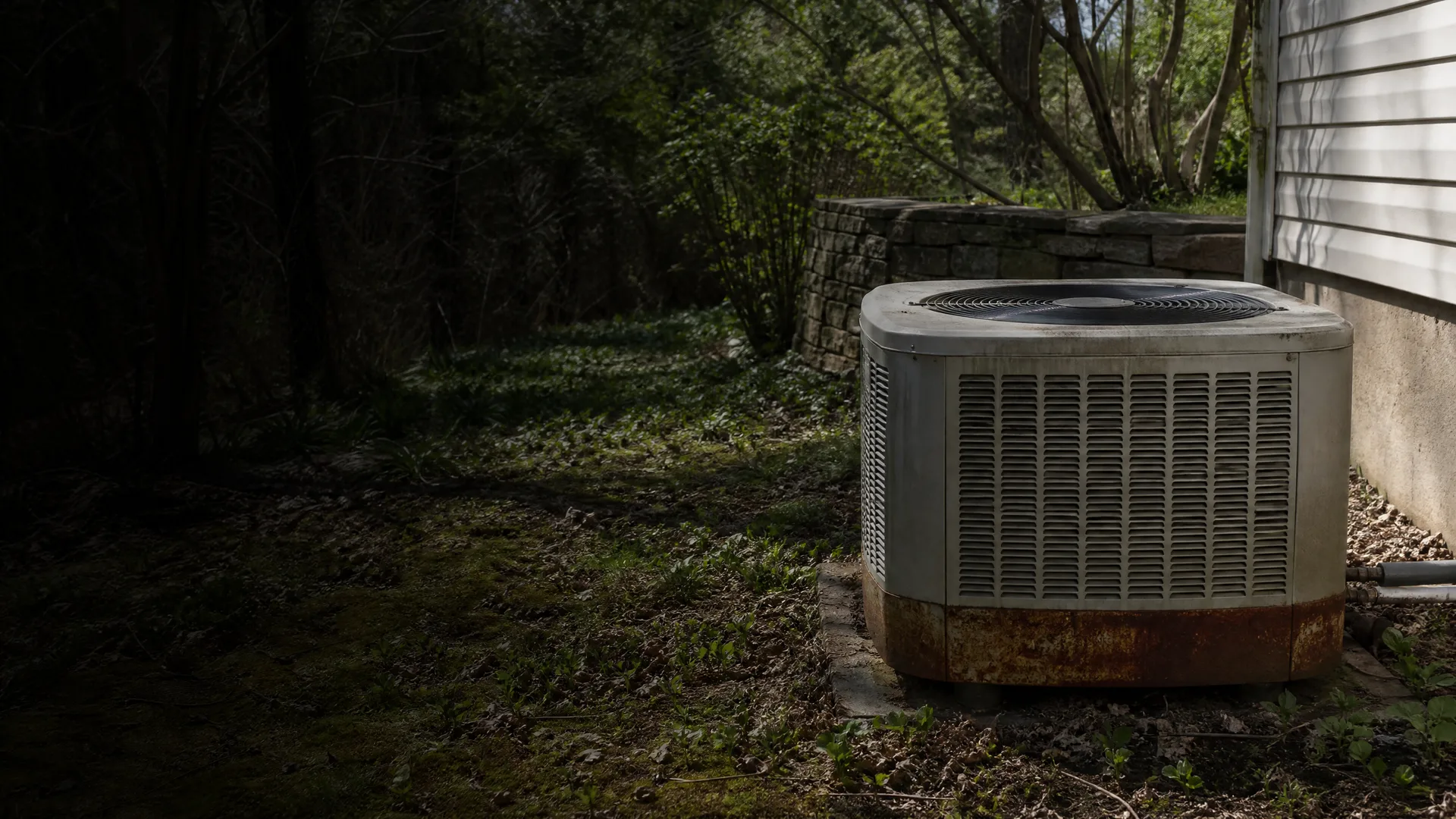
A weathered outdoor condenser unit with rust along its base sits on a pad beside a house with vinyl siding, next to a low stone wall and shaded vegetation.

You're out in the side yard in April, coffee still in hand, looking at the unit because the house never quite warmed up on the coldest night last week. The rust has crept along the base of the cabinet, worse than you remembered it being last spring. It still ran fine most of the winter, but on that one cold morning it couldn't keep up, and you're standing here now wondering if the unit itself is just tired. Behind you the yard is waking up, grass greening, but your eyes are on the metal at the bottom of the cabinet and the stain spreading up from it.

The right pro for this job

A Delaware winter puts your heat pump through real cold, not just a few chilly nights. Once temperatures settle into the 20s and teens for days at a time, the backup strips are doing more of the work than the heat pump itself, and with power priced at 17.15 cents per kilowatt-hour, that adds up fast on a system that's already struggling. Most homes around you heat with gas, which means your bill is carrying a cost theirs isn't. A heat pump sized and installed for Delaware's cold stretches, not just its sticky summers, holds up longer before backup heat has to take over. If yours is leaning on those strips most of the winter, or you're weighing a system before the next cold snap hits, a contractor who knows what this climate asks of a heat pump can look at your house and tell you where it stands. Send the request and let someone with the right experience take it from here.

Where your heat pump stands

  • A heat pump in Delaware starts losing ground somewhere between 25 and 35 degrees and falls further behind through the teens.
  • Below that point, electric strips carry more of the load, and at 17.15 cents per kilowatt-hour that shows up fast on the bill.
  • A unit that runs nonstop without warming the house has already lost the fight against the cold, not just slowed down.
  • Rust at the base of the cabinet or a system leaning hard on backup heat each winter points to equipment that's falling behind.
  • The right size and setup for a Delaware winter is a question an installer can answer by looking at your house and your current unit.
  • Sending the form is the last step on your end; from there, finding someone to look at it is off your plate.

A heat pump works fine in Delaware until the air outside gets into the 20s and teens, and that's when the math changes. Somewhere between 25 and 35 degrees the unit starts losing ground, and the colder it gets, the more the electric strips take over. Those strips aren't cheap to run, not at 17.15 cents per kilowatt-hour, and a house with gas already in the picture feels that jump on the bill. The clearest sign something's off isn't a strange noise or a dead unit. It's a system that runs nonstop and still can't get the house to the temperature on the thermostat. That's not a unit slowing down. That's a unit that's already lost. Rust creeping along the cabinet base, or backup heat carrying the load every winter instead of just the worst nights, both point the same way: toward equipment that's falling behind what your house actually needs. None of that means guessing at a fix. An installer who looks at your house and your current unit can tell you what size and setup actually holds up through a Delaware winter, instead of limping through it on backup heat. Once you send the form, that part isn't on you anymore. You're not left tracking down names or waiting on callbacks that don't come. Someone takes it from there, and the job of finding the right person for your house stops being something you have to manage yourself.

At dusk, a dark board-and-batten house with a standing-seam metal roof and lit entry walkway of stone pavers, with two large outdoor heat pump units on a stone-walled pad at right and trees and hills in the background.

Heat Pump Installation

Matched to your heat pump job

Step 1 of 3: Equipment
  • A corner of a room with an upholstered wood-framed armchair holding a floral pillow, a round side table with a ceramic lamp, books and a vase of greenery, a framed landscape painting on the wall, a patterned rug, and a sunlit multi-pane window.
    • Say what's going on with your heat pump, and a pro who works on them reaches out.
    • A local pro who knows heat pumps gets your details and gets in touch.
  • Interior corner with a wood-framed window showing green foliage outside, a framed landscape print on a beige wall, and a rounded stone vase of leafy branches on a wooden cabinet.
    • Send the form and stop researching installers for the new heat pump.
    • One request ends the search for a heat pump installer.
  • A pale ceramic vase holding olive branches sits on a dark wooden countertop beside a carved wooden dough bowl, next to a wood-framed window and a light painted plank wall.
    • Skip collecting and comparing quotes for the new heat pump.
    • Skip the round of in-home estimates for a new heat pump.
  • A dark wood round side table holding a brass lamp with a cream shade, a blue-and-white patterned bowl, and a white textured pot of greenery, beside an upholstered chair with a gray patterned cushion and a white-framed window showing green trees and flowering shrubs.
    • One installer gets your project, so there's no bidding war over it.
    • Your request goes to one pro, not a list of companies.



