Is a heat pump cheaper to run than gas heat in Delaware
A local installer who puts in heat pumps gets your project.
You already have a heat pump, and you're wondering if it's actually saving you money against gas heat. In Delaware, that's a fair question. Most homes around here heat with gas, and electric rates on the PHI/Delmarva side of things run high, so the math isn't as simple as "electric bad, gas good."
What decides the answer isn't the fuel. It's the machine: how old your heat pump is, what it's rated for, and whether it's sized right for your house. A heat pump installed ten years ago runs very differently from one installed last year, even in the same house with the same ductwork. That gap is usually where the real savings or losses show up, not in the price of electricity versus gas on any given month.
This is also where a lot of Delaware homeowners get stuck. You can look up electric rates and gas rates easily enough, but neither tells you what your specific system is doing with that fuel. That takes someone who's actually looked at the unit.
If you get to the point where you want that answer for your own house, the next step isn't a sales call. It's getting matched with a licensed Delaware contractor who installs and services heat pumps in homes like yours, someone who sees this exact question, gas versus heat pump, play out across different houses all winter and knows what tends to tip it one way or the other. You'd hear from one contractor, not a handful of companies competing for your number.
That matters because the answer for your house depends on details only someone standing in front of your system would catch. A contractor familiar with Delaware homes and your type of equipment can tell you whether what you have now is working for you or against you, and what a properly sized install would change.
The numbers below give you a general read on how heat pumps and gas stack up here. What they can't do is tell you about your unit specifically.
Is a heat pump cheaper to run than gas heat in Delaware?
You've got a heat pump in a state where gas is the default and electric rates run high on the PHI/Delmarva side. You want to know if you're actually coming out ahead, or if the furnace next door is quietly winning on the monthly bill. It's a fair thing to want settled before another winter goes by.
Usually not, once it gets cold
A heat pump moves heat instead of burning fuel, which makes it cheap to run down to a point. Below the mid-30s it has to lean harder, and most units switch on backup electric strip heat to keep up, which costs more per hour than the pump running alone. Delaware winters sit in that range often enough that your bill reflects it. Against Delmarva's electric rates, a gas furnace burning cheaper fuel for those same hours usually comes out ahead on a cold month, even though the heat pump wins outright every time it's cooling your house in summer. Whether yours is actually losing that fight depends on its age, its backup heat setting, and how cold your specific winter runs.
What the balance point decides
A heat pump moves heat instead of making it, and that's why it costs less to run most of the year. But below a certain outdoor temperature, usually somewhere in the 30s, the unit has to lean on backup electric resistance heat to keep up. That's the expensive mode. Where your balance point is set, and whether the system was sized and configured right for Delaware winters, decides how many nights it actually falls into that mode.
Why the compressor matters more
Two heat pumps with the same rating on paper don't behave the same in January. A single-stage compressor runs at full output or not at all, so on a mild 45 degree day it's working harder than it needs to. A variable-speed compressor scales down and holds a steady, lower draw. That difference shows up directly on the electric side of the bill, especially across a full Delaware winter.
Gas Furnace vs Heat Pump in Delaware
Gas furnace
A gas furnace burns fuel directly, so its cost moves with the price of natural gas rather than with how cold it gets outside.
It can heat a cold house back up fast, since burning gas puts out more heat right away than a heat pump's compressor does.
A gas furnace does not lose capacity when the temperature drops into the 20s or lower, the way a heat pump's output falls off.
Your gas bill will not spike the way an electric bill can once a heat pump switches over to backup resistance heat on the coldest nights.
A furnace needs a flue and a gas line already run to the house, which most homes in Delaware already have.
Heat pump
A heat pump moves heat rather than burning fuel for it, so above its balance point it uses less energy to deliver the same warmth.
Once the outdoor temperature drops into the 30s, the unit starts leaning on backup electric resistance heat, and that's the expensive part of running one.
Because electric rates on the PHI/Delmarva side run high, the hours spent on backup heat matter more here than in a state with cheaper power.
The same unit cools the house all summer, which a gas furnace cannot do, so you are not running two separate systems.
How often it needs backup heat depends on how cold your winters actually run and how the unit is sized for your house.
Heat pump holding its balance point
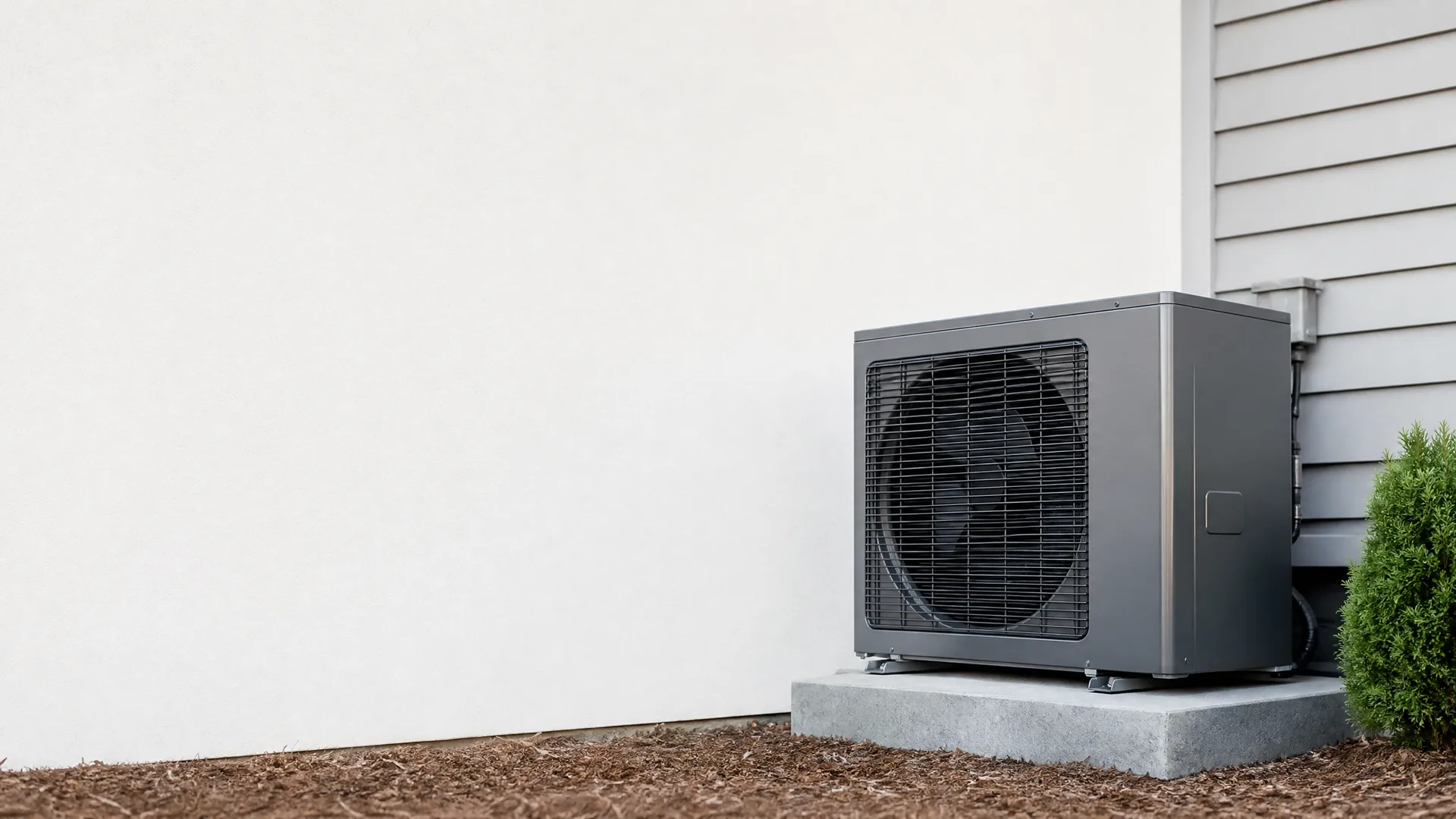
This is a heat pump doing what it's built to do, sitting there pulling heat out of the air above the balance point. On a 40 degree day in Delaware, it's running on electricity alone and costing less per hour than a gas furnace would. The compressor cycles, the coil does its job, nothing extra kicks in.
Heat pump below its balance point
Same kind of unit, older, lines running bare along the block foundation. Once it's in the 20s outside, this one's leaning on electric resistance backup to keep up, and that backup runs on the same expensive Delmarva power as everything else in the house. That's the stretch where the gas furnace next door might be winning on cost.
Before you get your heat pump installationAfter you get your heat pump installation
Below the balance point, electric heat kicks in
On the coldest nights, your heat pump leans on backup electric resistance heat. That's the hour your bill climbs, not the mild days in between.
A heat pump sized and set up for your house holds its balance point lower, so backup heat kicks in less. That's where an installer who knows Delaware winters earns the cost back.
Delaware summers feel heavy for a reason. Averaged across June, July and August, the dew point here runs 65°F, according to NOAA data. That's the sticky range, the air that makes a short walk to the mailbox leave you damp. Your heat pump has to pull that moisture out along with the heat, which means it runs longer than a thermometer reading alone would suggest. On a muggy evening it may cycle for a stretch even though the temperature itself isn't extreme. A unit sized and installed for Delaware's humidity, not just its heat, keeps up with that load instead of running long and still leaving the house feeling damp.
NASA POWER T2MDEW county cells weighted by homes
Why does your heat pump bill jump on the coldest nights?
You'll notice it on the nights that drop into the 20s or lower. The air coming out of the vents feels cooler than usual, and the system seems to run without stopping. That's the backup electric resistance heat picking up the load your heat pump can't carry alone once it's below its balance point. It's the most expensive heat in the house, and it's the heat you're using exactly when you need it most. If it's kicking on during stretches that aren't that cold, or running longer than a night or two of hard freeze would explain, the unit may be undersized or losing ground somewhere, and that shows up on the bill before it shows up anywhere else.
A mild January in Delaware, your heat pump covers the whole month on electricity alone, and the bill reflects that lower cost per hour of running on electric heat.
A stretch of nights in the 20s, and the backup resistance heat carries more of the load, which is when a heat pump's bill can land closer to what a gas furnace would have cost.
Power costs 17.15 cents per kilowatt-hour statewide
At 17.15 cents per kilowatt-hour, every hour your backup electric heat runs costs real money fast. Above the balance point, your heat pump still beats that rate by moving heat instead of making it. Keeping the compressor carrying the load, not the backup strips, is what keeps your bill down.
EIA-861 2025 statewide residential average
Where this leaves you
Above the balance point your heat pump beats gas on cost per hour, and below it the backup heat narrows that gap on the coldest nights.
A right-sized install keeps the compressor carrying the load longer, which is the piece that decides your bill more than the thermostat setting.
A Delaware contractor who sets up heat pumps every winter knows where the balance point should sit on your system and checks it instead of guessing.
Matching you with one licensed local contractor means one visit and one set of answers about your equipment, not a round of competing sales calls.
The same contractor who sizes the install for Delaware's summers is the one who can tell you how your system will actually run in January.
So, is a heat pump cheaper to run than gas heat in Delaware? Above the balance point, yes, it's moving heat instead of making it, and that costs less per hour even with PHI/Delmarva's rates. Below it, backup electric heat picks up the load and the gap closes. Where that balance point sits, and how much of your winter falls above or below it, comes down to how your system was sized and installed. That's the part worth getting right, because it decides more of your bill than anything you do with the thermostat.
A contractor who installs and services heat pumps in Delaware all winter has seen where these systems usually sit, what tends to fail first, and how a unit sized for your house should behave on a January night versus a mild one in March. That's different from someone who mostly works on furnaces and treats a heat pump like a side job. When you put in a request here, it goes to one licensed contractor local to you, not a handful of companies competing for the same lead. You get one visit, one set of answers specific to your equipment, and someone who already knows what questions to ask about your system before they show up. That's a more useful starting point than a stack of callbacks from strangers trying to win the job.