







Why your heat pump has ice on it in a Delaware winter

Step 1 of 3: Equipment

A thin layer of frost on your outdoor unit in winter is normal. Your heat pump pulls heat out of cold air, and moisture in that air freezes on the coil as it does. The system is built to handle this. It runs a defrost cycle every so often, sending hot refrigerant backward through the coil to melt the ice, and the outdoor fan slows or stops while that happens. What is not normal is a thick coat of ice covering the whole unit, ice that is still there a few hours later, or ice that keeps building through a cold snap. That points to something keeping the system from defrosting on its own: a defrost control board that isn't switching over, a stuck reversing valve, a sensor reading wrong, or a fan that isn't moving enough air across the coil to begin with. A refrigerant charge that's too low can also cause heavy icing, since the coil runs colder than it should. Left alone, a heat pump that can't clear its own ice will keep losing heating capacity until it can't keep the house warm at all.

A gray-haired man in a dark sweater sits on a light gray sofa in a living room, looking toward a sunlit window with trees outside.
A gray-haired man in a dark blue sweater sits on a light gray sofa in a sunlit living room, looking off to the side, with a potted plant, shelving unit, and large glass doors behind him.
A bearded man with graying hair in a dark green sweater sits on a sofa in a living room, looking off to the side, with a sliding glass door and a dim kitchen doorway behind him.
A gray-haired man in a dark knit sweater sits on a light gray sofa in a living room, looking toward a sunlit window, with houseplants, a lamp, and framed art in the background.
A gray outdoor condenser unit on a concrete pad beside a house with gray lap siding, connected by conduit and refrigerant lines to a wall-mounted disconnect box, with a green shrub and mulch bed at left.
A light, even frost that clears on its own during a defrost cycle is the coil doing its job in the cold.
An outdoor air conditioning or heat pump condenser unit on a concrete pad beside a house with horizontal vinyl siding, a gray electrical disconnect box and conduit on the wall, and a concrete walkway in the foreground.
Thick ice climbing the sides or built up underneath means the defrost cycle isn't catching up anymore and something needs a look.
  1. Cold air crosses the outdoor coil and frost starts forming on it.

  2. A sensor reads the coil getting too cold and triggers defrost mode.

  3. A reversing valve switches the system to send hot refrigerant outside.

  4. The outdoor fan shuts off so heat stays on the coil.

Is the ice on your heat pump normal or a problem

Walk outside and look at the unit. A thin white coating on the coil is fine. Ice that's thick, clear, or climbing up the sides and under the cabinet is not. You might hear the outdoor fan straining or not turning at all. You might notice the air coming from your vents feels cooler than usual, or the system running longer to keep the house at temperature. If the ice builds up around the fan blades or the base, the unit can't pull air through the coil the way it needs to, and it will keep working harder without heating your home properly. Left alone through a cold stretch, that strain on the compressor is how a repair turns into a replacement.

A gray outdoor air conditioner or heat pump unit on a concrete pad beside a house with horizontal lap siding, with conduit and refrigerant lines running up the wall and green shrubs and mulch at left.

Normal defrost

The coil has a light frost, the fan turns freely, and refrigerant lines run clean into the wall. Every so often the system reverses itself, melts what's formed, and goes back to heating. You might see steam coming off the unit for a few minutes. That's the defrost cycle finishing its job.


An outdoor air conditioning condenser unit on a concrete pad beside a house with horizontal siding and a concrete foundation, with refrigerant lines running to a wall-mounted disconnect box and shrubs at left.

Ice taking over

The grille is caked and the coil underneath is building ice instead of shedding it. The fan may be struggling against the buildup or not turning at all. Left alone, airflow keeps dropping and the unit works harder to move heat that isn't getting through. A technician can tell you if it's a sensor, a valve, or something else behind it.

Ice That's Fine vs Ice That Isn't

Ice that clears on its own

  • The frost is thin and even across the coil, not built up in one spot.
  • It forms overnight or on the coldest days and is gone within an hour or two.
  • The outdoor fan spins freely and you can hear it running.
  • Warm air blows from your indoor vents the whole time, maybe a little cooler during the defrost cycle itself.
  • Steam or water dripping from the unit afterward is just the ice melting off.

Ice that needs a repair call

  • Ice covers the coil in a solid sheet or has built up underneath the cabinet.
  • The same thick ice is still there a few hours later or the next day.
  • The outdoor fan is slow, straining, or not turning at all.
  • Your indoor air is blowing cold instead of warm, or the system has stopped heating.
  • The unit is making a new noise, like grinding or a hard clicking, since the ice showed up.
  • Refrigerant lines running into the wall are iced over along with the coil.
An outdoor air conditioner condenser unit on a concrete pad beside a house with horizontal lap siding, with a gray electrical disconnect box and conduit on the wall and bare dirt and mulch in the foreground.
Before you get your heat pump repair
A gray outdoor condenser unit on a concrete pad beside a light-colored lap-sided house, with a wall-mounted disconnect box and conduit, dark mulch, and a green shrub to the right.
After you get your heat pump repair

Stop chasing a heat pump pro

A heat pump stuck under a shell of ice isn't heating your house. With gas as the backup most Delaware homes don't have, that coil has to keep working through January nights, and every hour it sits iced over is an hour your living room loses ground. The cause could be a defrost sensor that's stopped reading the coil right, a reversing valve stuck in the wrong position, low refrigerant, or a fan motor too weak to clear the ice once defrost kicks in. Figuring out which one from your driveway isn't realistic, and with power costs what they are here, a heat pump running wrong while you wait it out costs you more than the repair will. Someone who works on these units all winter in Delaware has seen which part usually fails first in weather like this, and can get your system back to cycling the way it's supposed to. Send the request and that search becomes someone else's job, not another thing on your list this week.

A dark bedroom with an unmade bed and pillows beside a curtained window showing rain-streaked glass and palm foliage outside.

It's a little after eleven on a January night and you're still in your coat because the living room hasn't warmed up. Outside, the heat pump is a block of ice, the fan silent under it. You keep bumping the thermostat up, and the air coming through the vent stays cool. Upstairs the kids are under extra blankets. You press a hand to the register anyway, hoping it changed since the last time. Through the window you can see the outdoor unit, glazed white in the porch light, not a wisp of steam off it, not running. The house is just slowly giving up the heat it had.

Power costs 17.15 cents per kilowatt-hour statewide

At 17.15 cents a kilowatt-hour, a heat pump stuck in defrost or icing over keeps pulling power while barely warming your house. You're paying for electricity that isn't turning into heat, which is worse here than most places since few Delaware homes have a gas furnace to fall back on.

EIA-861 2025 statewide residential average

A dark gray outdoor condenser unit on a concrete pad beside a house with beige horizontal siding, with a gray electrical disconnect box and conduit on the wall, mulch beds, a hosta plant, a shrub, and mowed lawn in front.

Clean coil, clear lines

This is a heat pump keeping up with a cold night. The coil is clear, the grilles are open, and the line running into the wall is doing its job without a fight. Nothing here is working harder than it should.

A weathered outdoor condenser unit on a concrete pad beside a house with light horizontal siding, surrounded by bare dirt and a shrub.

Caked grilles, buried coil

Dirt and grime like this block airflow before ice ever shows up. A coil that can't breathe gets colder than it should, pulls more frost, and leans on a defrost cycle that can't keep pace. This is what asking for a repair looks like before the call.

A middle-aged woman with shoulder-length dark hair, wearing a gray cardigan over a cream top, sits in an upholstered armchair and looks toward a sunlit window, with a shelf holding framed pictures and a plant behind her.
A woman and a child wrapped together in a knitted gray blanket on a couch, with the child's head resting on her shoulder and a lit table lamp and houseplant in the background.

What the Ice on Your Unit Means

  • A thin, even frost that melts off during a normal defrost cycle means the system is doing what it's built to do.
  • Thick ice climbing the cabinet or a fan that's stopped turning means the defrost cycle has fallen behind and the unit needs a repair, not a wait-and-see.
  • A heat pump stuck under ice stops moving heat into your house while still pulling power from the outlet, which costs you on both ends.
  • A local contractor who works on heat pumps through the Delaware winter has likely seen this exact failure on a night this cold before.
  • Sending one request puts the job in front of one licensed contractor instead of leaving you to field calls from several companies.
  • Once you know which kind of ice you're looking at, the next step is getting someone out to look at the coil itself.

A light frost that melts off on its own is a heat pump doing exactly what it was built to do. Thick ice that climbs the cabinet, or a fan that has stopped turning, is a different matter. That's the defrost cycle falling behind, and it won't catch up on its own. Every hour it sits like that, the unit pulls power without moving heat into your house, and with gas backup rare in Delaware homes, that coil is what's standing between you and a cold night. Once you can tell the two apart, the next step is straightforward: get a contractor out to look at the coil itself.

Delaware winters are hard enough on a heat pump that local contractors see this exact failure every season. Someone who works on these units through January and February has likely already come across the same ice, the same frozen fan, the same strained sound you're hearing outside. That familiarity matters more than it might seem. It means less time spent guessing and more time spent fixing what's actually wrong.

Sending a request through this page puts it in front of one licensed, local contractor, not a handful of companies competing for the job. You won't be fielding calls all afternoon trying to sort out who can actually come look at your unit. One contractor gets the details, and from there it's in their hands.

The ice told you something was off. What happens next is getting someone qualified to the coil before the house loses any more ground.

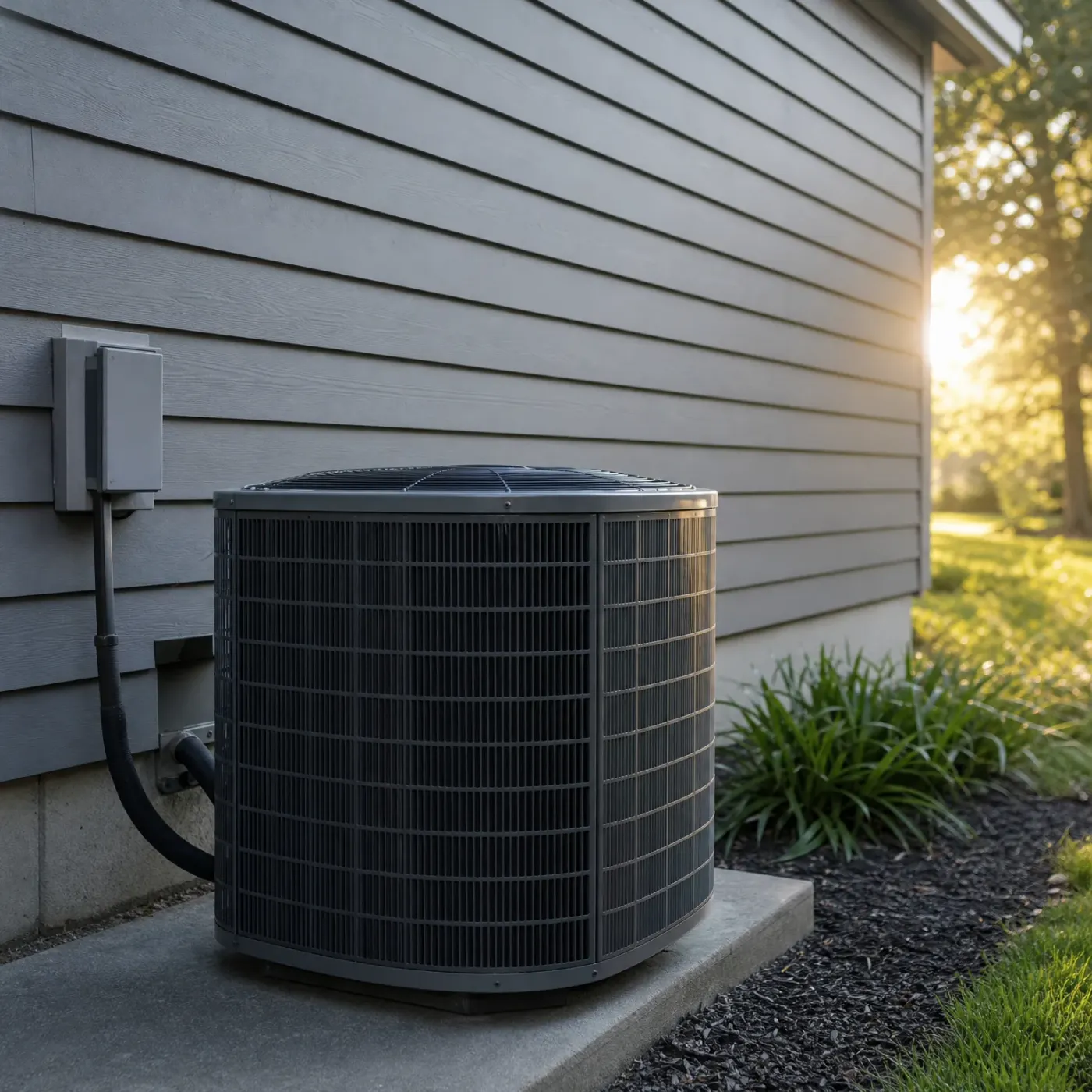
An outdoor air conditioner condenser unit on a concrete pad beside a gray horizontal-lap-sided house, with an electrical disconnect box and refrigerant line on the wall, grass, shrubs and a tree with low sun behind.

Hand off the heat pump problem

Find a licensed pro

Your request stays with one local pro.

You're not committing to anything by asking.